

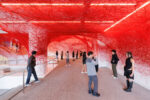
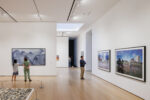
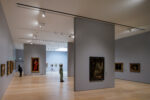


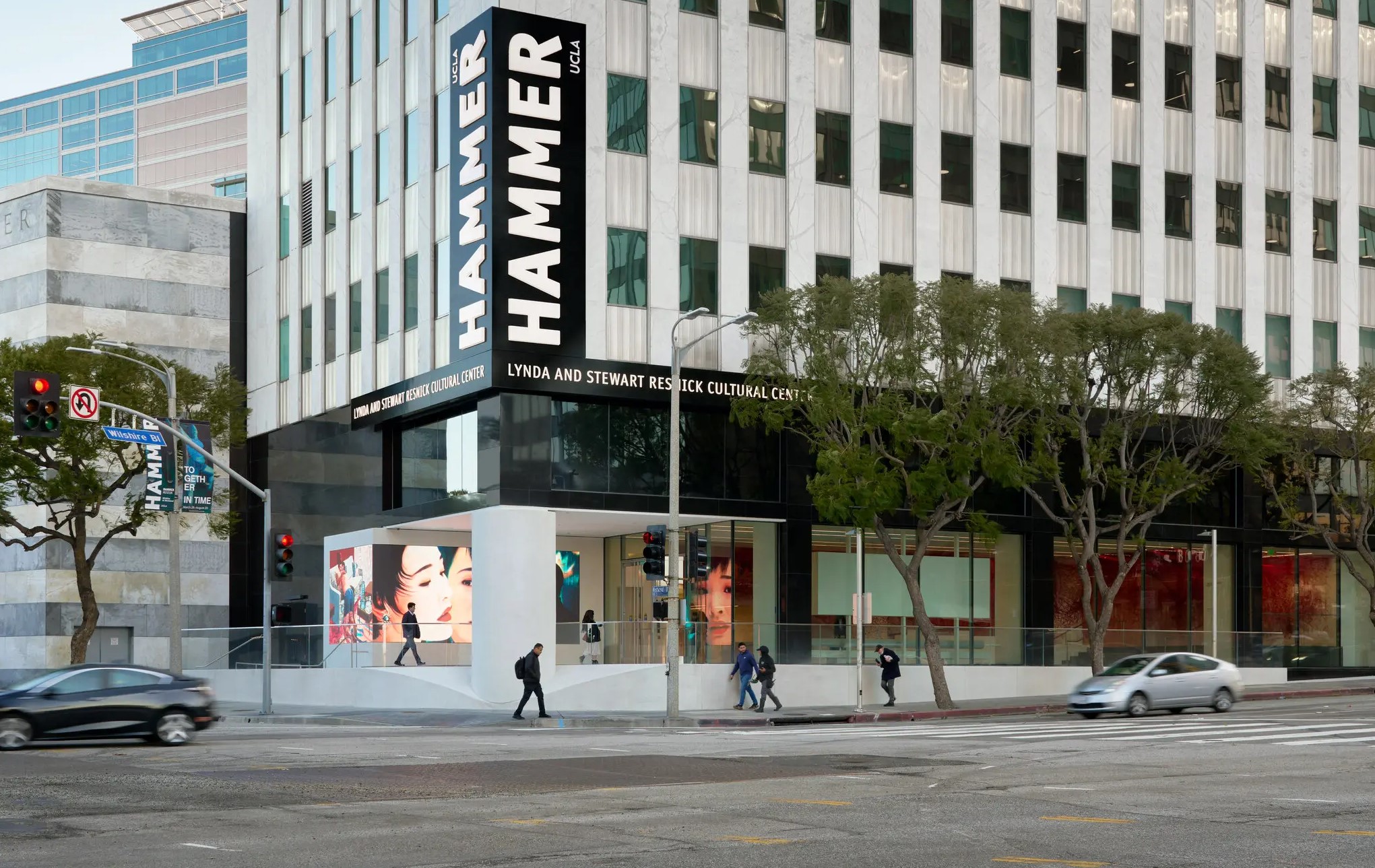



Over the past two decades, MMA has worked with the Hammer Museum to transform an inward-facing building into an open, campus-scaled cultural institution. Originally designed by Edward Larrabee Barnes and built to showcase a private collection of historical paintings, the museum has evolved into an internationally recognized center for contemporary art and culture. The building occupies a prominent site at the intersection of the University of California, Los Angeles campus and Westwood’s commercial district, yet its initial configuration—characterized by blank facades and multiple disorienting entryways—offered little connection to its urban surroundings or visibility within the broader cultural landscape of Los Angeles.
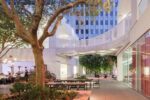
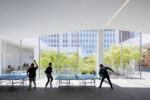
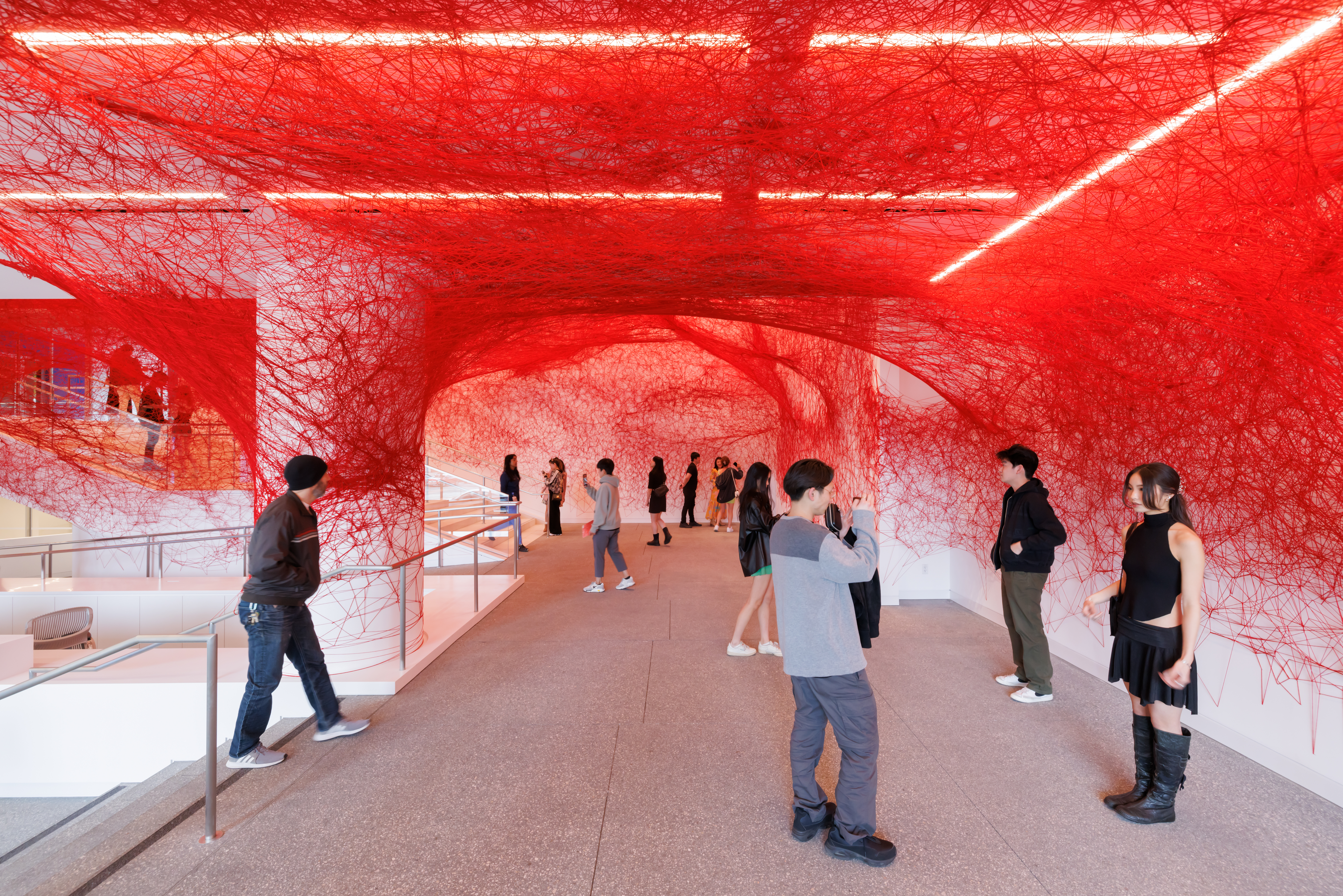
MMA’s work has unfolded incrementally across multiple phases, addressing the museum’s expanding programmatic needs while establishing a coherent spatial and circulatory strategy across the entire campus. Rather than a single comprehensive intervention, the project has proceeded through a series of targeted renovations and additions—each building on the last to gradually reorient the institution outward toward the city and the university. The design transforms the formerly vacant central courtyard into the organizational heart of the museum, establishing new routes of connection from the lowest parking level through the courtyard, across a suspended bridge, and up to the museum’s upper levels, where views open to the surrounding streets and sky.
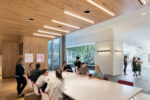
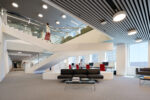
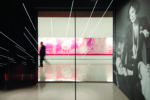
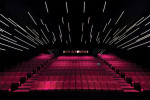
Completed work includes the Billy Wilder Theater (2006), courtyard renovation and education lab (2012), the John V. Tunney Bridge linking the museum to the adjacent office tower (2015), renovated and expanded galleries (2017), the Nimoy Studio (2018), a new cafe and bookstore (2018, 2022), reconfigured entry and lobby galleries (2023), and 40,000 square feet of renovated office and curatorial space in the adjoining tower—originally designed by Claud Beelman and now owned by UCLA. Across these interventions, translucent and transparent elements organize circulation while revealing the active life of the building and the range of programs housed within.
Taken together, these projects establish the Hammer Museum as a porous, publicly accessible institution embedded within the civic and academic life of Westwood and UCLA. What was once an internalized building defined by barriers now operates as an open framework for encounter—connecting the museum’s interior spaces to the campus, the street, and the city beyond.
LOCATION / Los Angeles, California
TYPE / Contemporary Art Museum
STATUS / Completed 2023
ROLE / Design Architect & Architect of Record
AWARDS / Real Estate and Construction Review Building of America Award 2008