

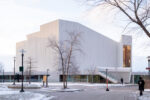
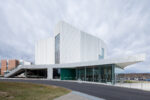
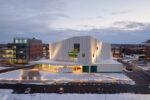
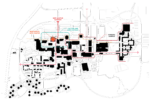


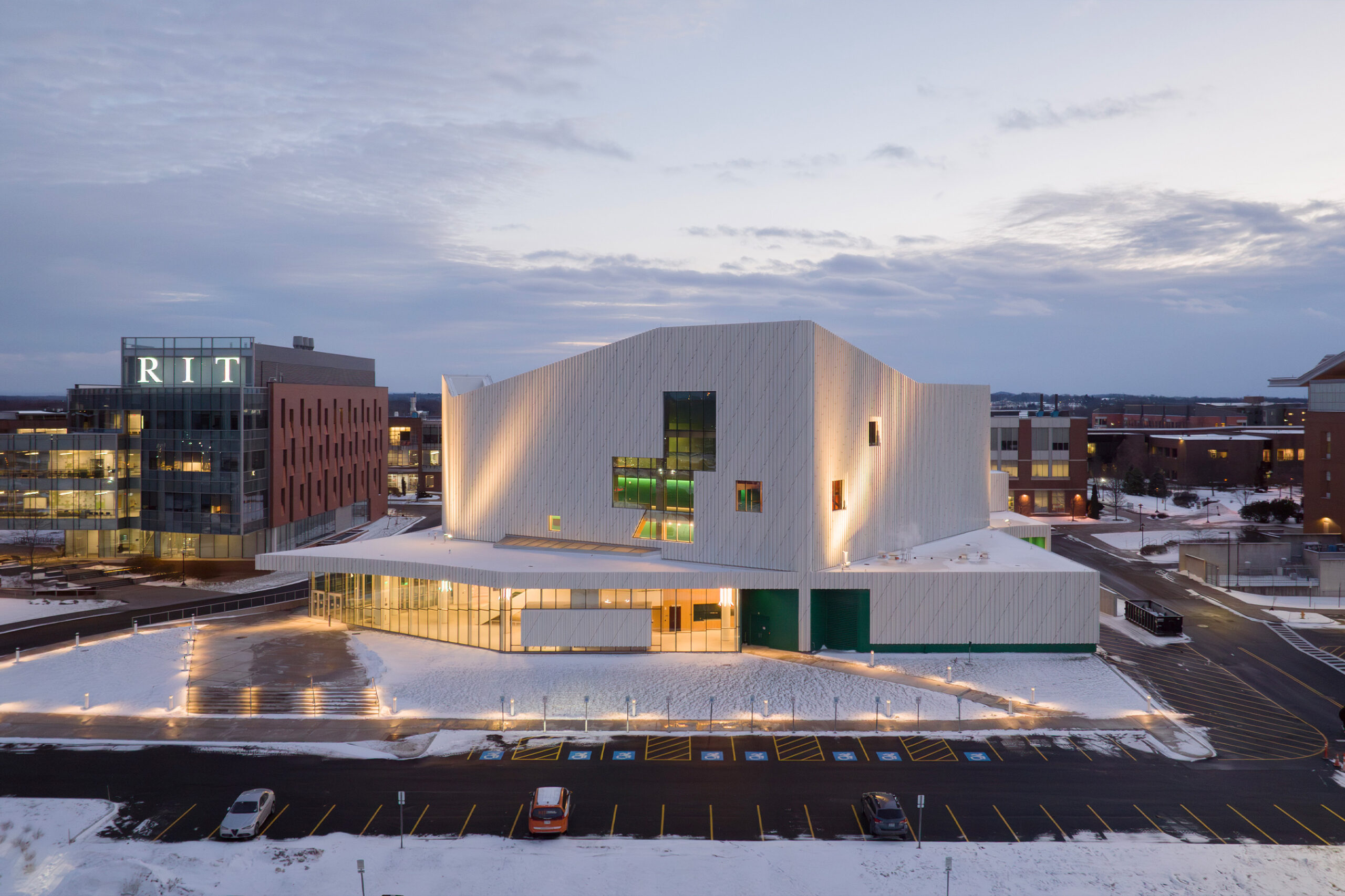
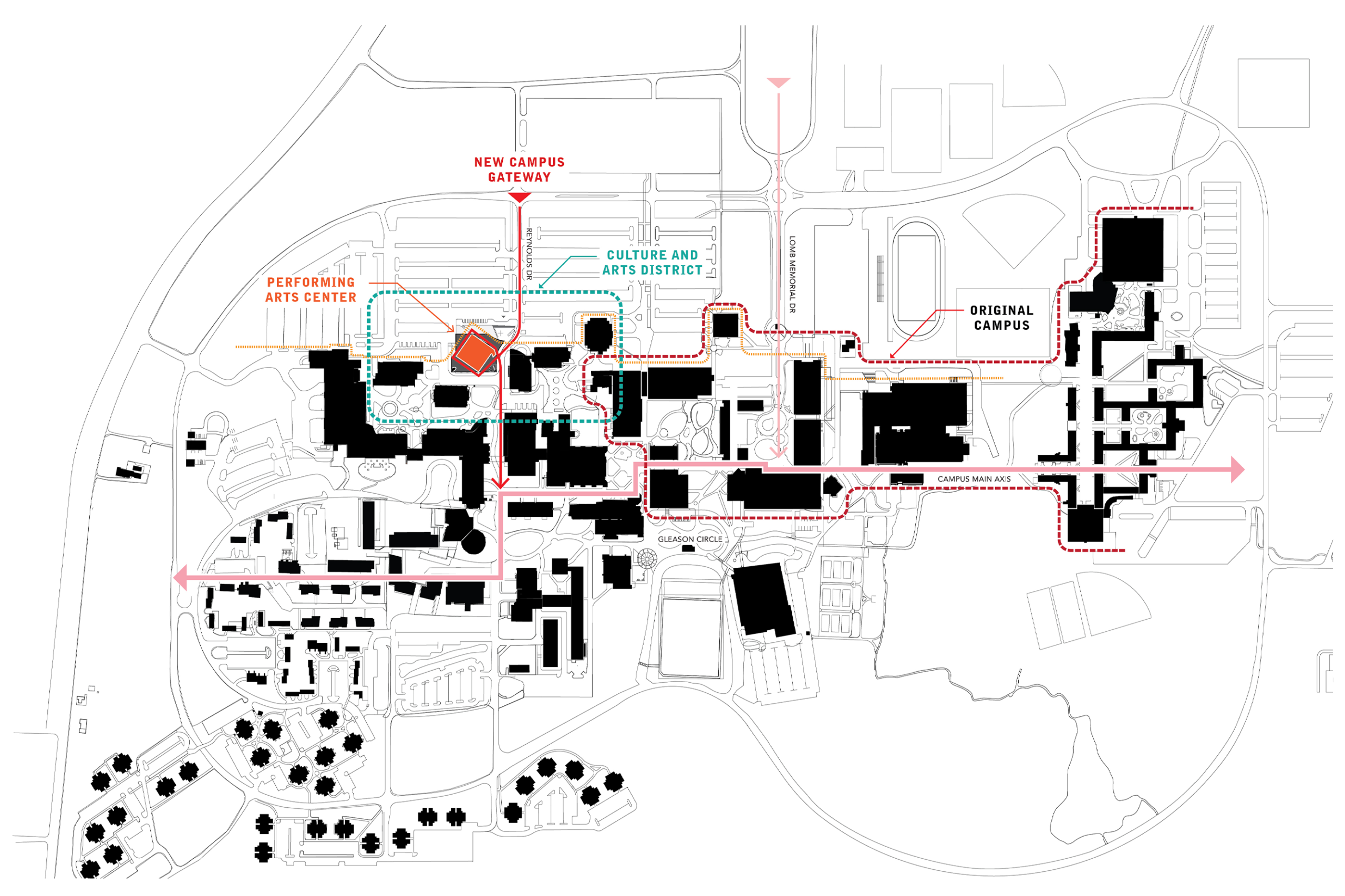
The Performing Arts Center at Rochester Institute of Technology establishes a new gateway to the campus at the threshold to its 1970’s modernist core. Positioned at the northern edge of the campus, the building announces a shift in the university’s identity: since 2019, RIT has offered Performing Arts Scholarships to incoming students, and more than 3,000 have now been awarded these partial scholarships, including over 500 in the current class alone. The center gives this growing population — most of them non-arts majors pursuing STEM disciplines alongside music, theater, and dance — its first dedicated home.
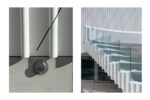
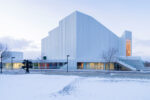
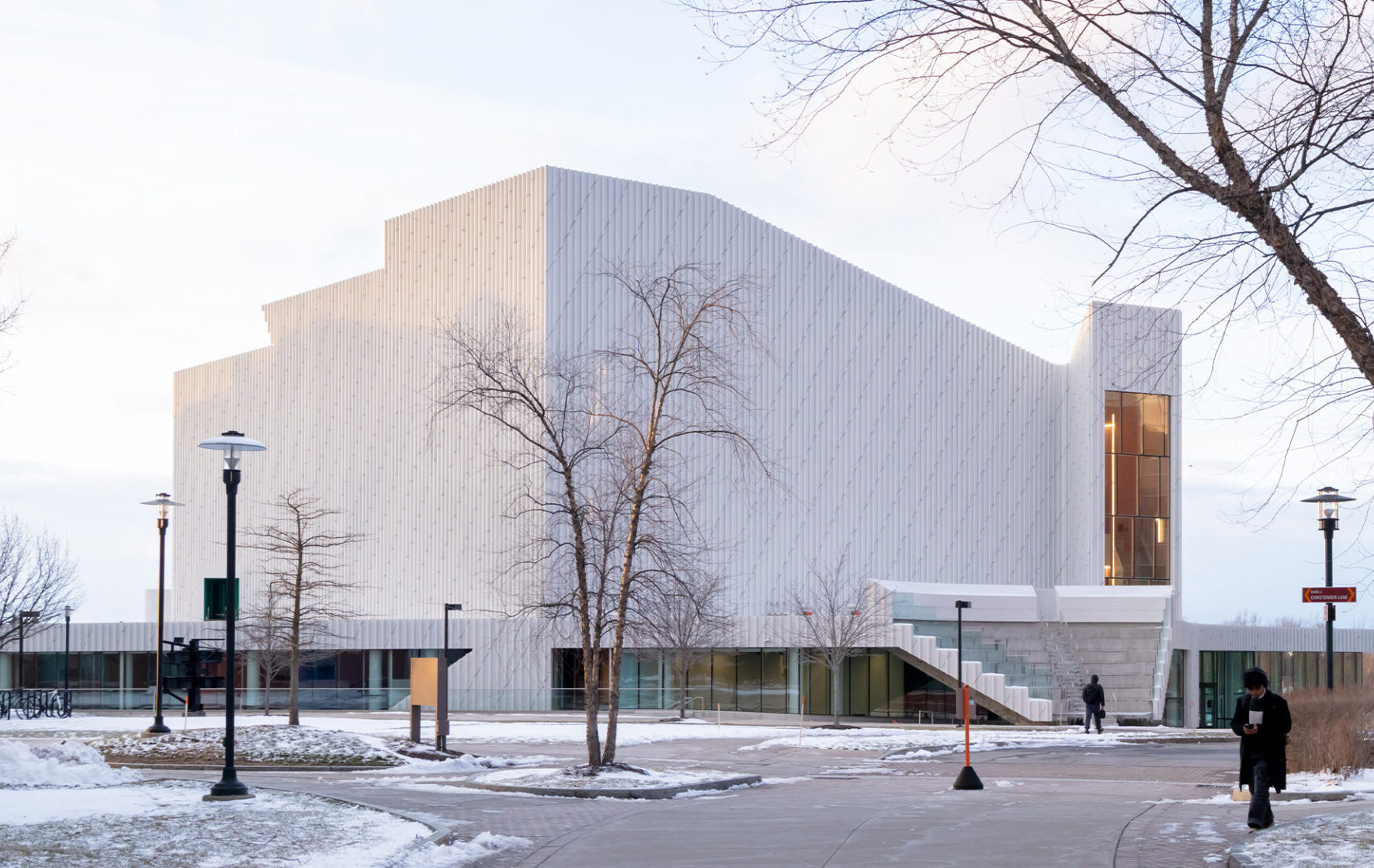
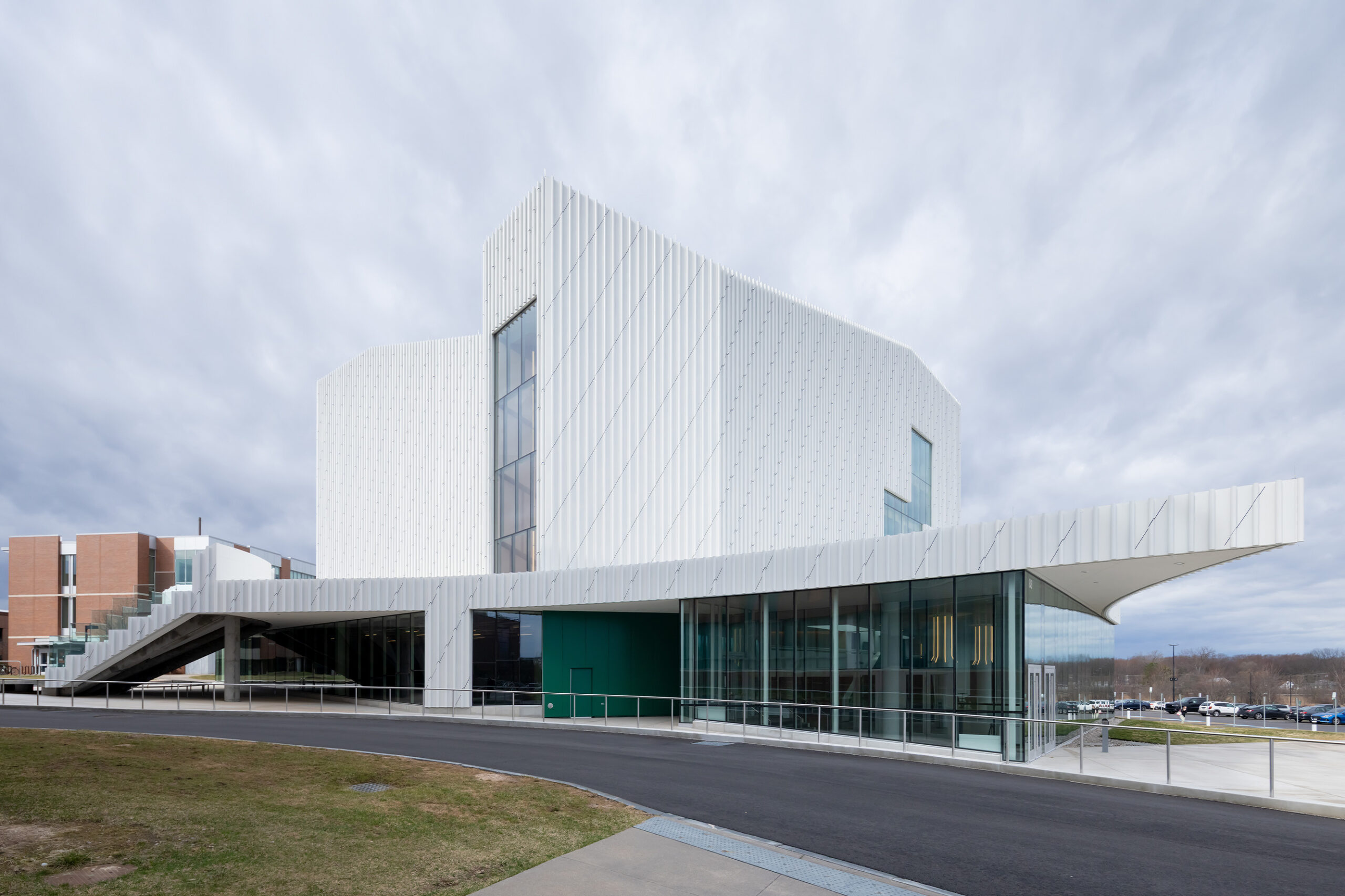
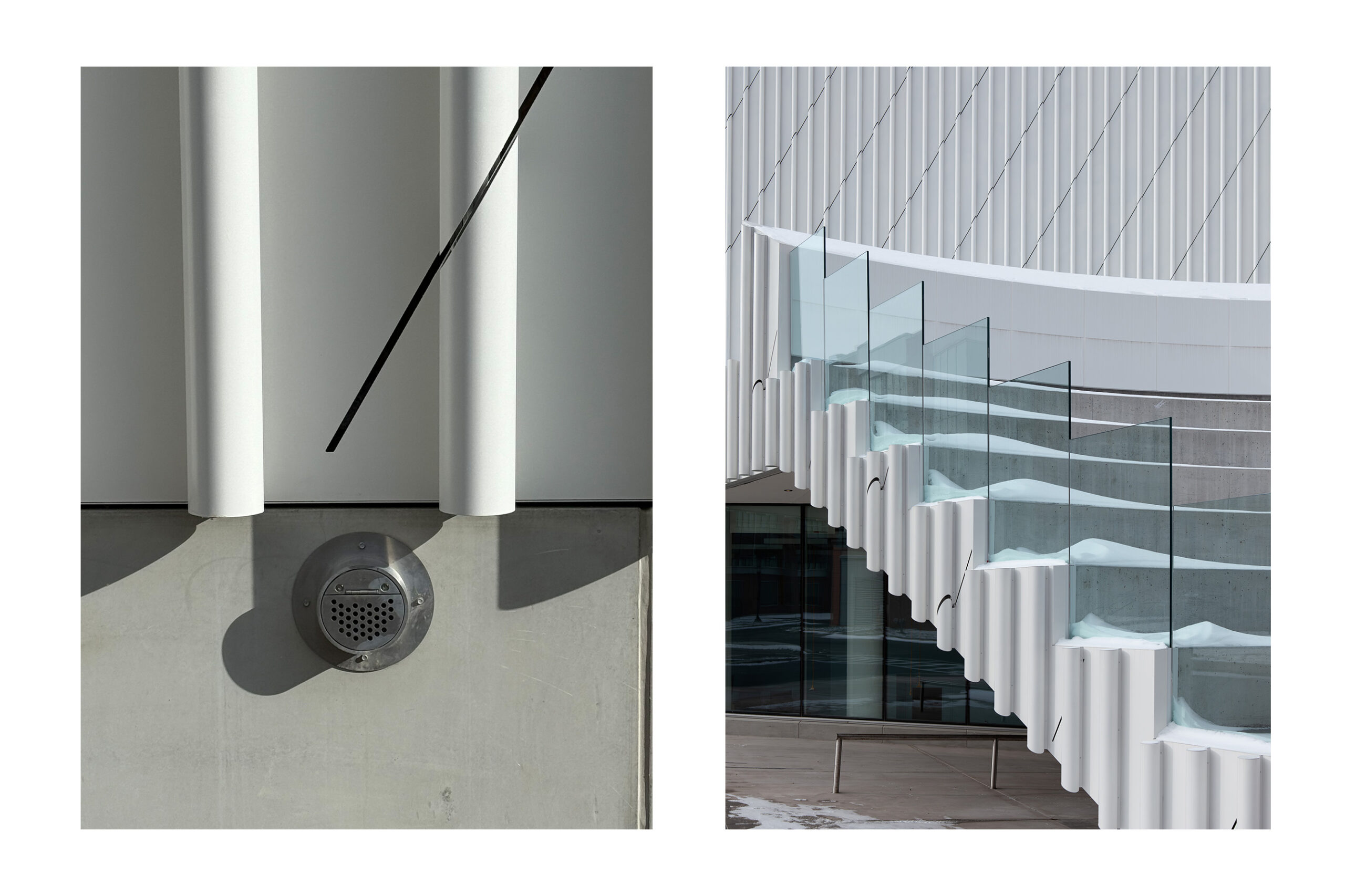
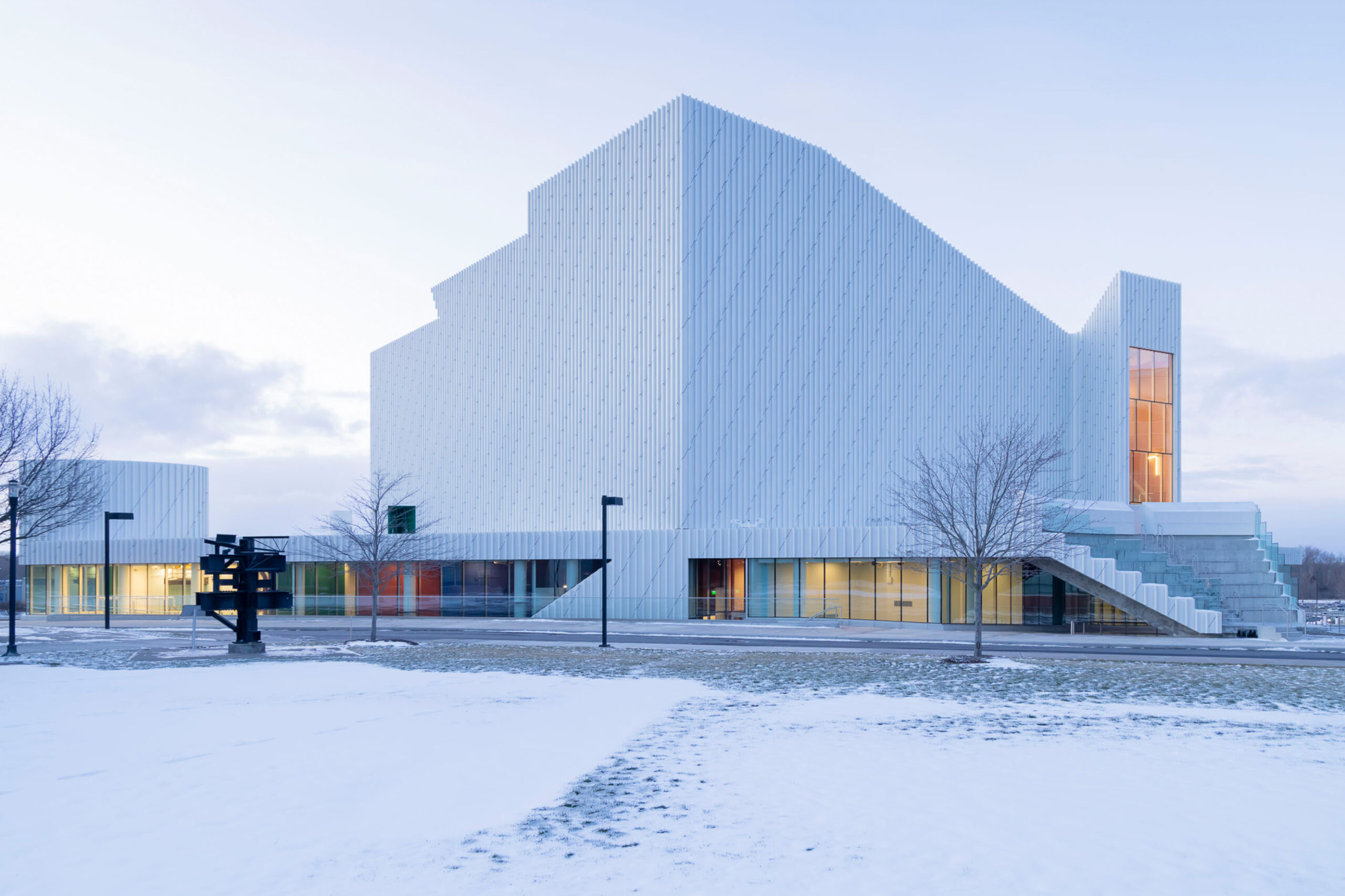
The form of the theater appears to rotate on its axis. Spinning with the movement of students, faculty, and audience, through this new campus entryway. The building’s exterior sculptural form is clad in an aluminum skin, diagonally panelized, and with an outer layer of extruded vertical tubes that capture the effects of the changing light across the day. Extensive glazing along the perimeter reveals rehearsal rooms, costume shops, and scene-making spaces, making the processes of artistic production visible from the exterior — a deliberate inversion of the insular, often windowless theater typology, positioning the program’s daily activity as a visible part of campus life. An outdoor amphitheater opens onto a plaza, extending the building’s public presence into the landscape and further dissolving the line between performance and campus ground.
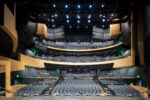
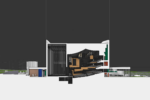
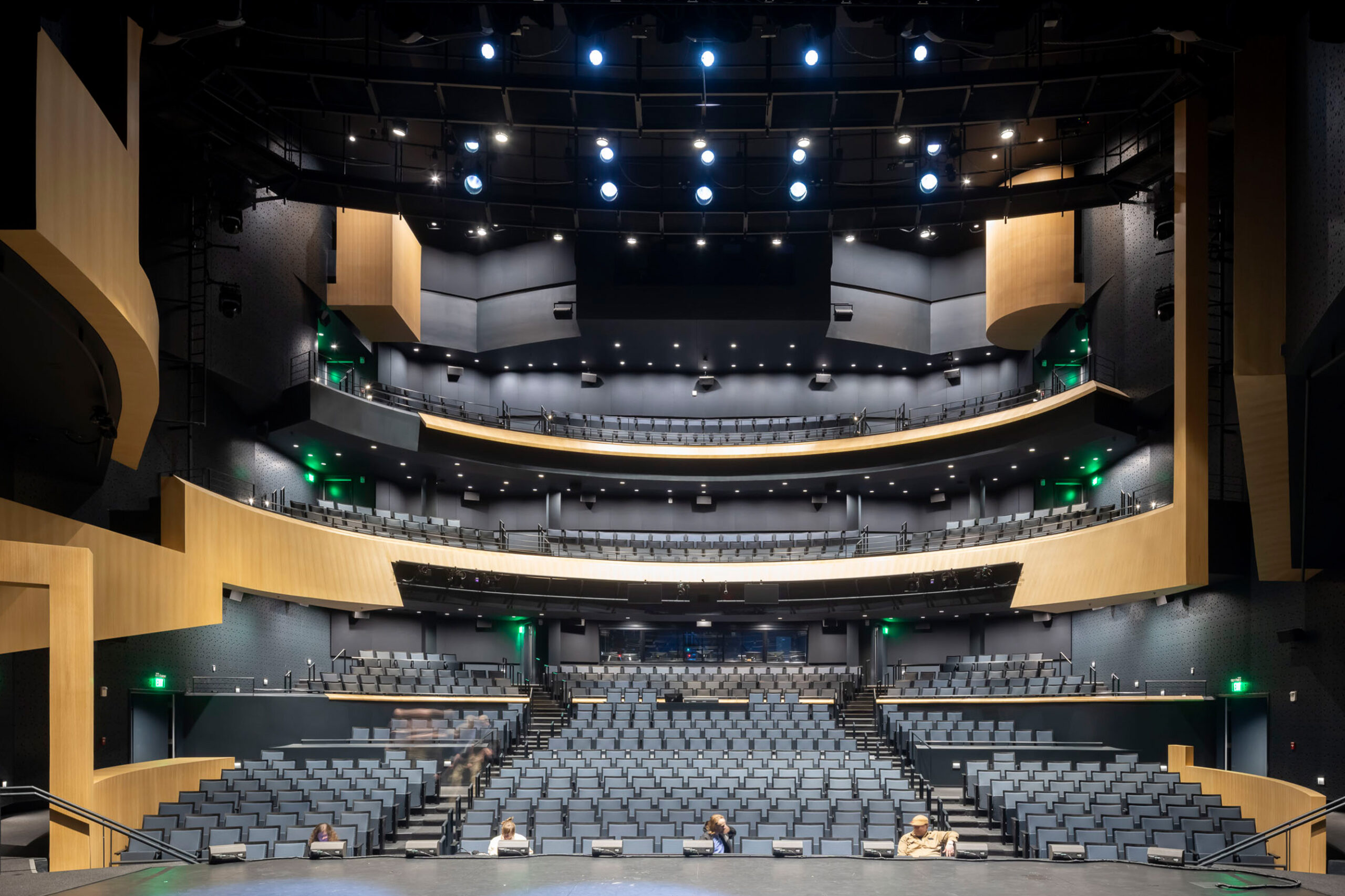
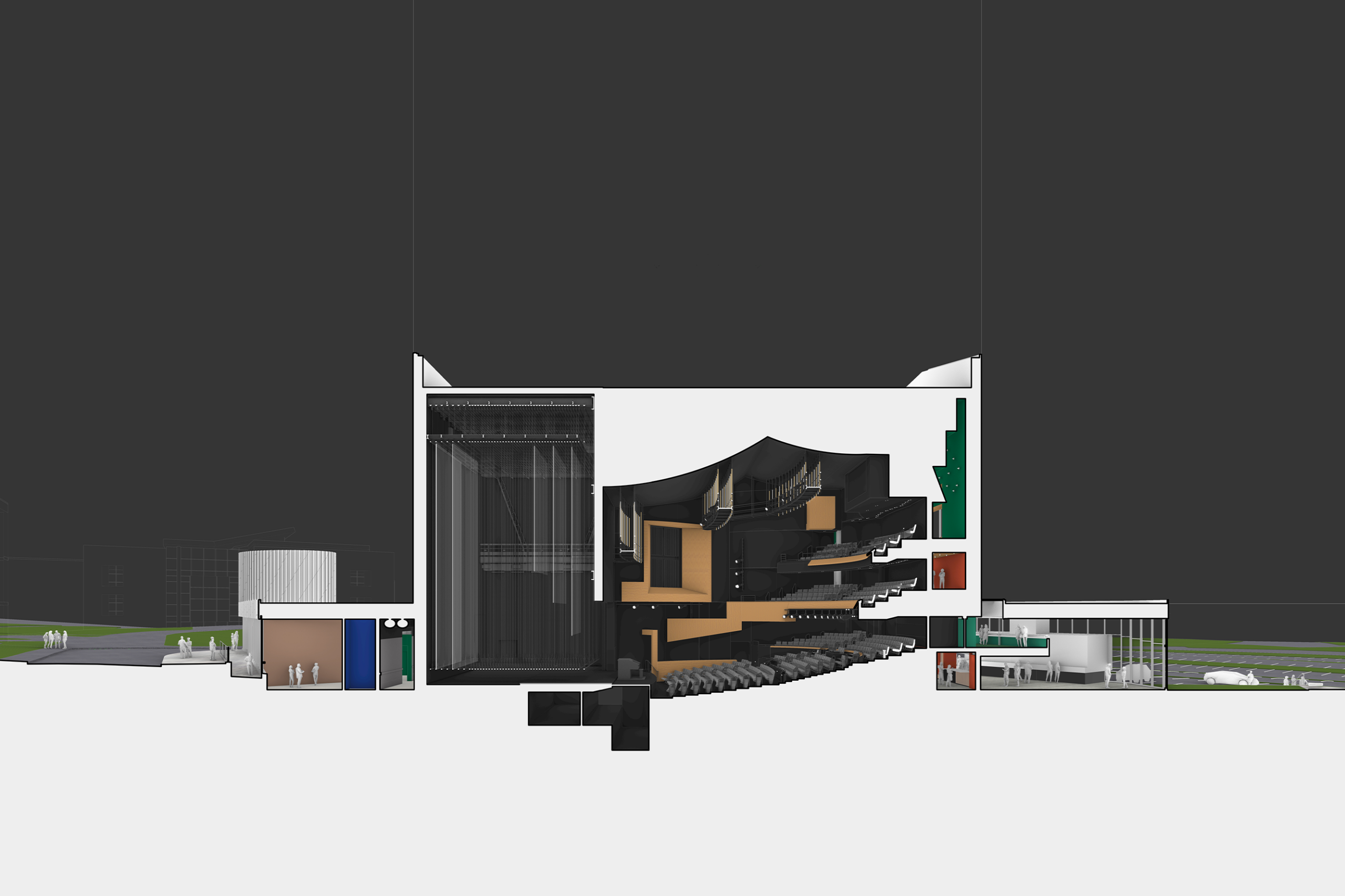
At the center of the building, a 750-seat theater is organized in a horseshoe configuration with two balconies and aesthetically is a collage of a flexible “black box” with wood-clad elements floating in the space suggesting a traditional Broadway stage. The theater is anchored by the Barton Opus 234, a historic theater pipe organ built in 1927 for the Hollywood Theatre in Detroit — one of the most celebrated movie palaces of its era.
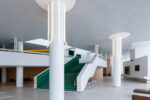
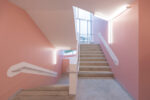
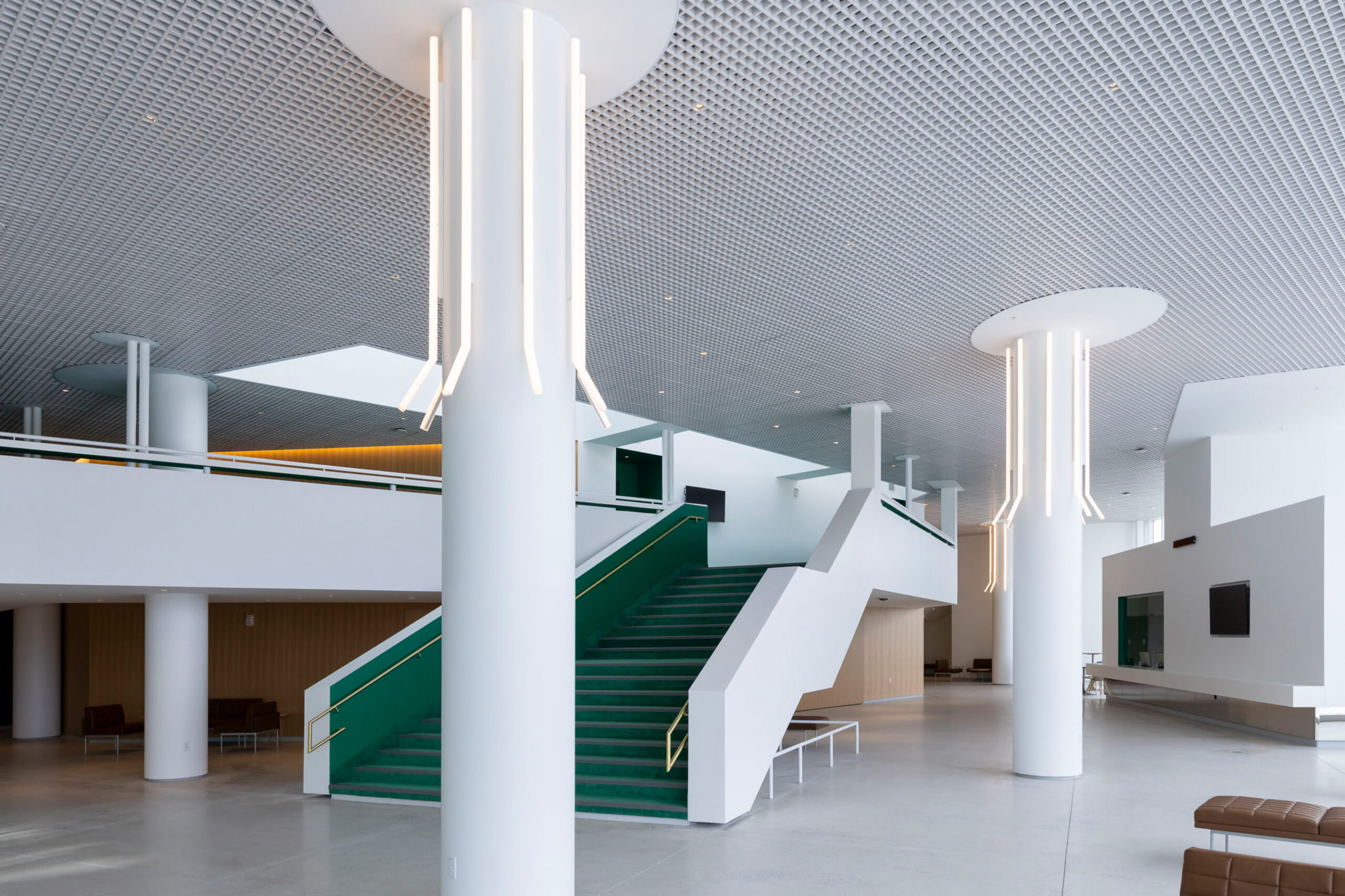
Surrounding the volume of the theater, the lobby’s spatial form and circulation moves visitors in a counterclockwise choreography, with a box office, food service, and public amenities integrated into the sequence of movement. The mezzanine level is designed as a social gathering balcony. Supporting spaces include a rehearsal room with a sprung floor, costume and scene shops, and smaller practice and office areas. Together, these facilities make performance production visible and accessible to the RIT campus community, the city of Rochester, and visiting audiences.
LOCATION / Rochester, New York
TYPE / University Music Performance Complex
STATUS / In Construction
SIZE / 750 seats
ROLE / Design Architect